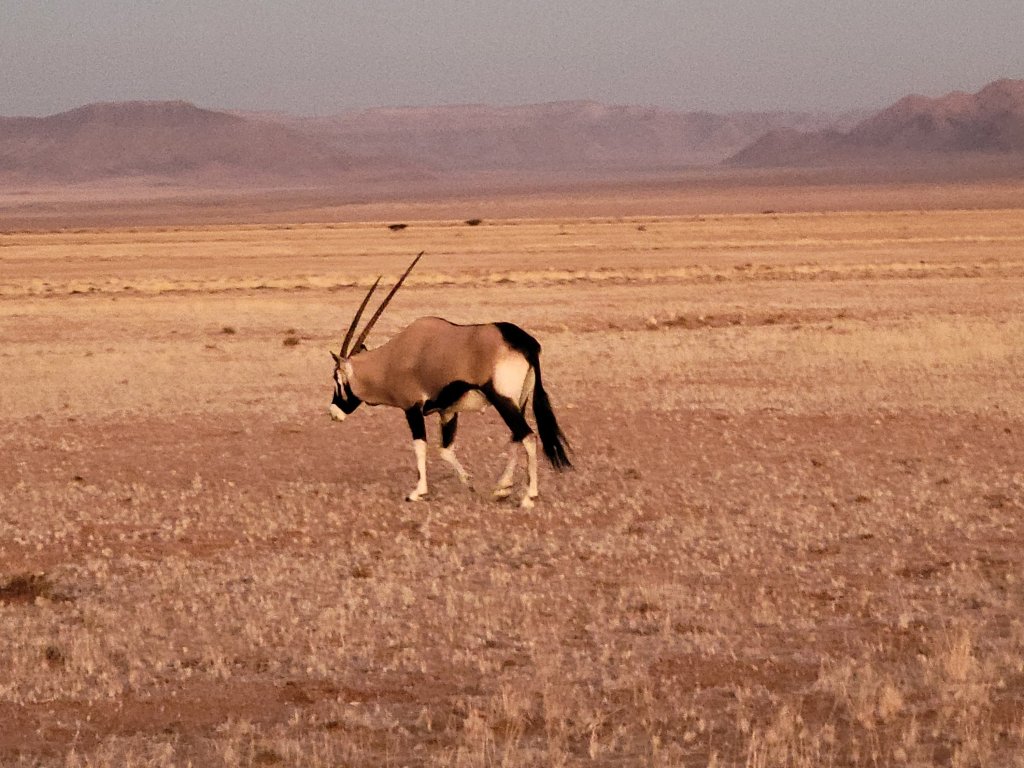
Namibia, on the coast between Angola and South Africa. We flew into Windhoek. which is a very modern European-feeling country. Founded in the late 1800s by Germans, it carries that feel mixed with the desert setting. Namibia seems to be the leader in wildlife conservation and management, with conservatories managed by the native people. Allowing the native people to have control over the area they live in while protecting the plant species and wildlife.
The people we met were proud of their country. We felt their gratitude that we were there to experience Namibia. The cities, towns, and countryside are clean and litter free. The tap water is safe to drink almost everywhere.
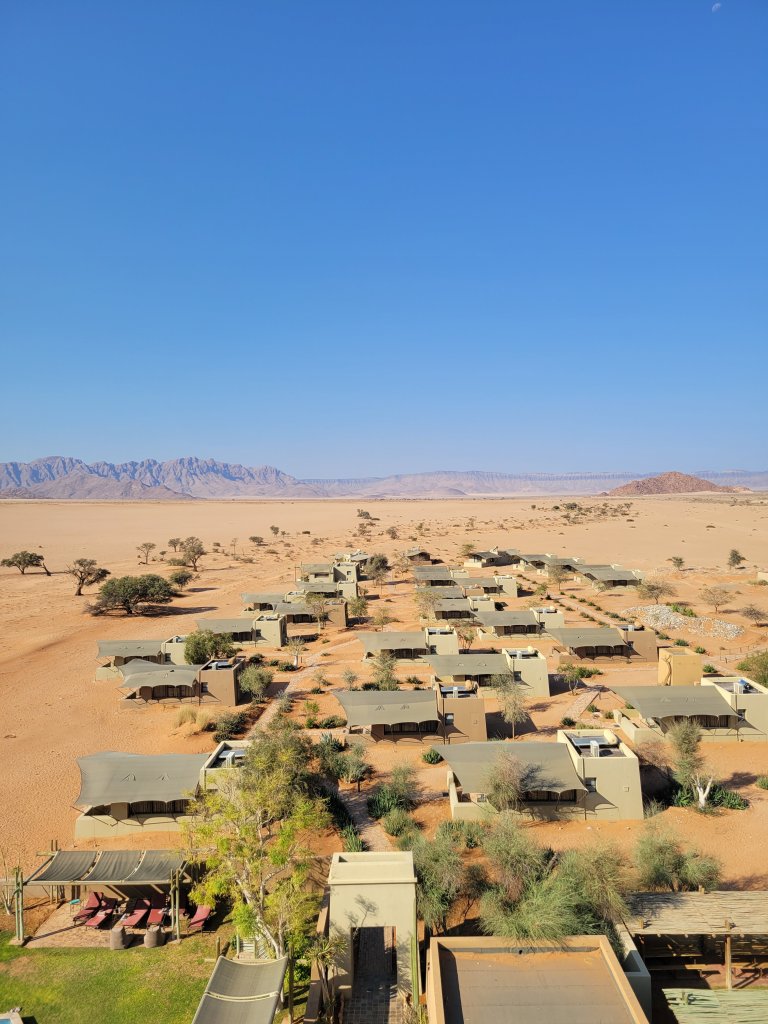
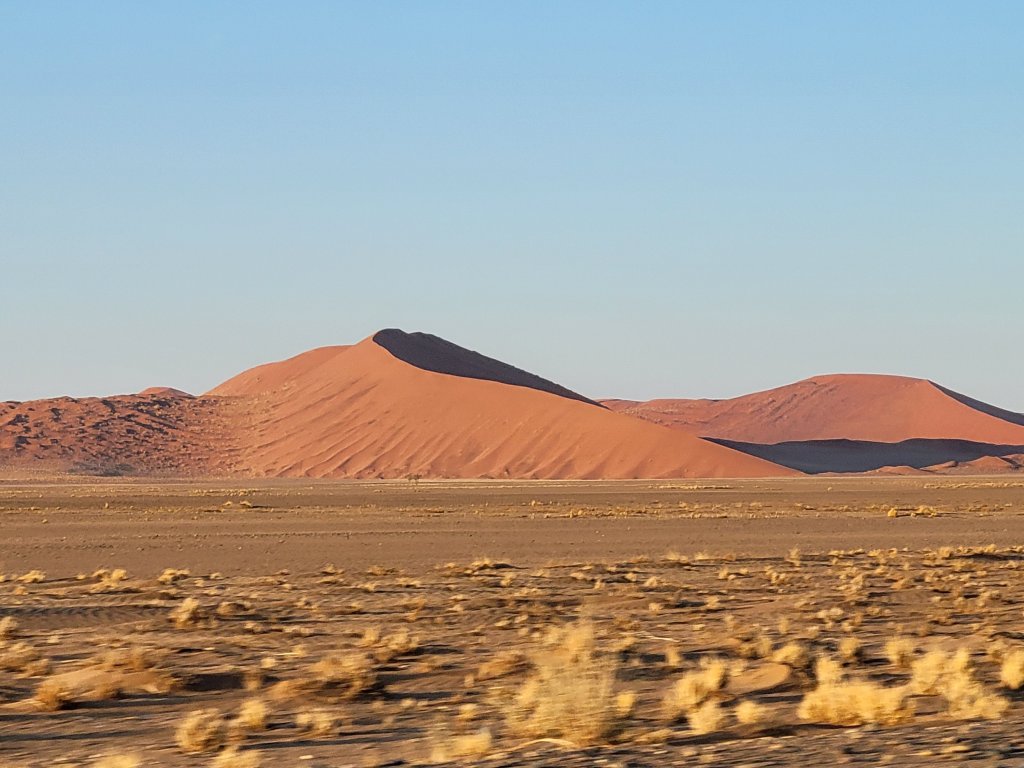
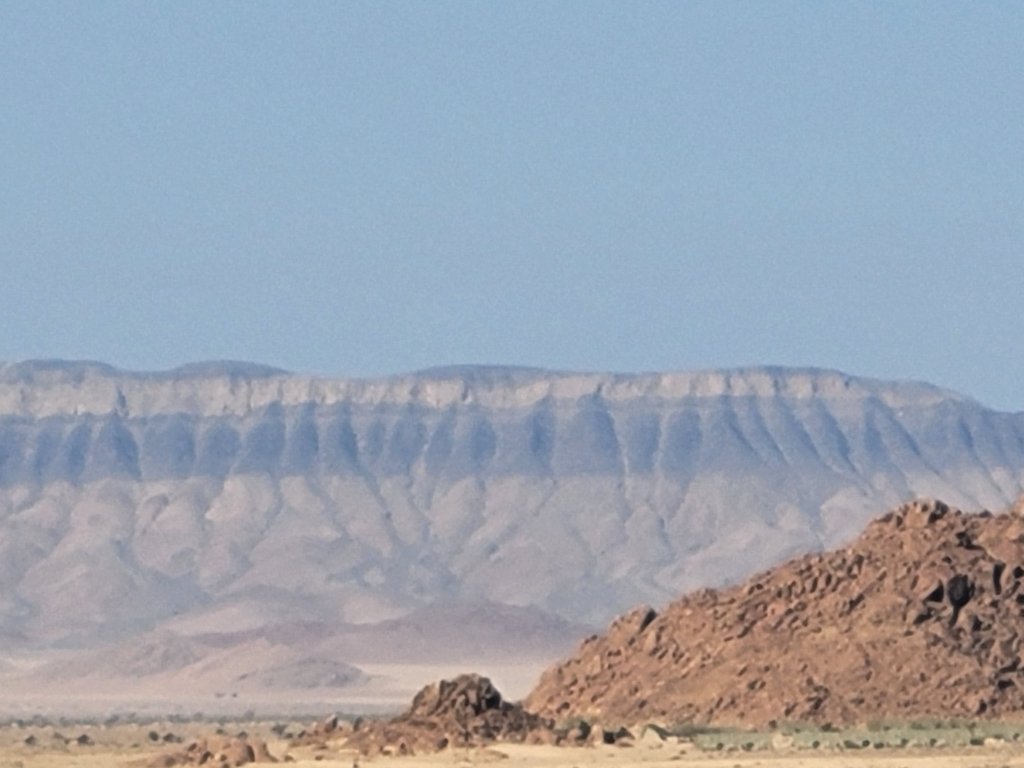
The days are warm; when the sun sets it is chilly. The desert is arid and scenic. The terrain changes continually from sand, clay, and rocky flats, to rocky outcrops, to sand dunes reaching 1200 feet in height. This region receives no to very little rain. Wildlife and plants survive off of fog that rolls on from the ocean.
In the Rehoboth region, a high plateau of central Namibia, the Baster people derived from ‘Bastard’ are descendants of European settlers and indigenous African women. When these people were not accepted by either the Europeans or the Indigenous Africans, they settled in this dry arid region and created a unique self-governing community that still holds strong.



 Travels Unraveled
Whoa! Talk about fascinating! I’ve heard wonderful tales about fabulous safaris in Namibia too!
LikeLike
Beautiful.
Sent from my iPhone
LikeLike